
Eating in Dalmatia: the rules of the game first, then the addresses
Between Split and Trogir the food is good, but not always in the way you know it from Germany, Austria or Switzerland. If you know the little quirks – how a menu is read, why fish is charged by the kilo and why you order peka the day before – you'll eat much more relaxed in Dalmatia and usually better too.
We live and work in Kaštel Stari, right between Split airport and Trogir's old town. What follows is not a ranking but an orientation: first the basics, then places in Kaštela, Trogir and Split that really exist and have stood the test of years.
Konoba, restoran, gostionica: what's behind the names?
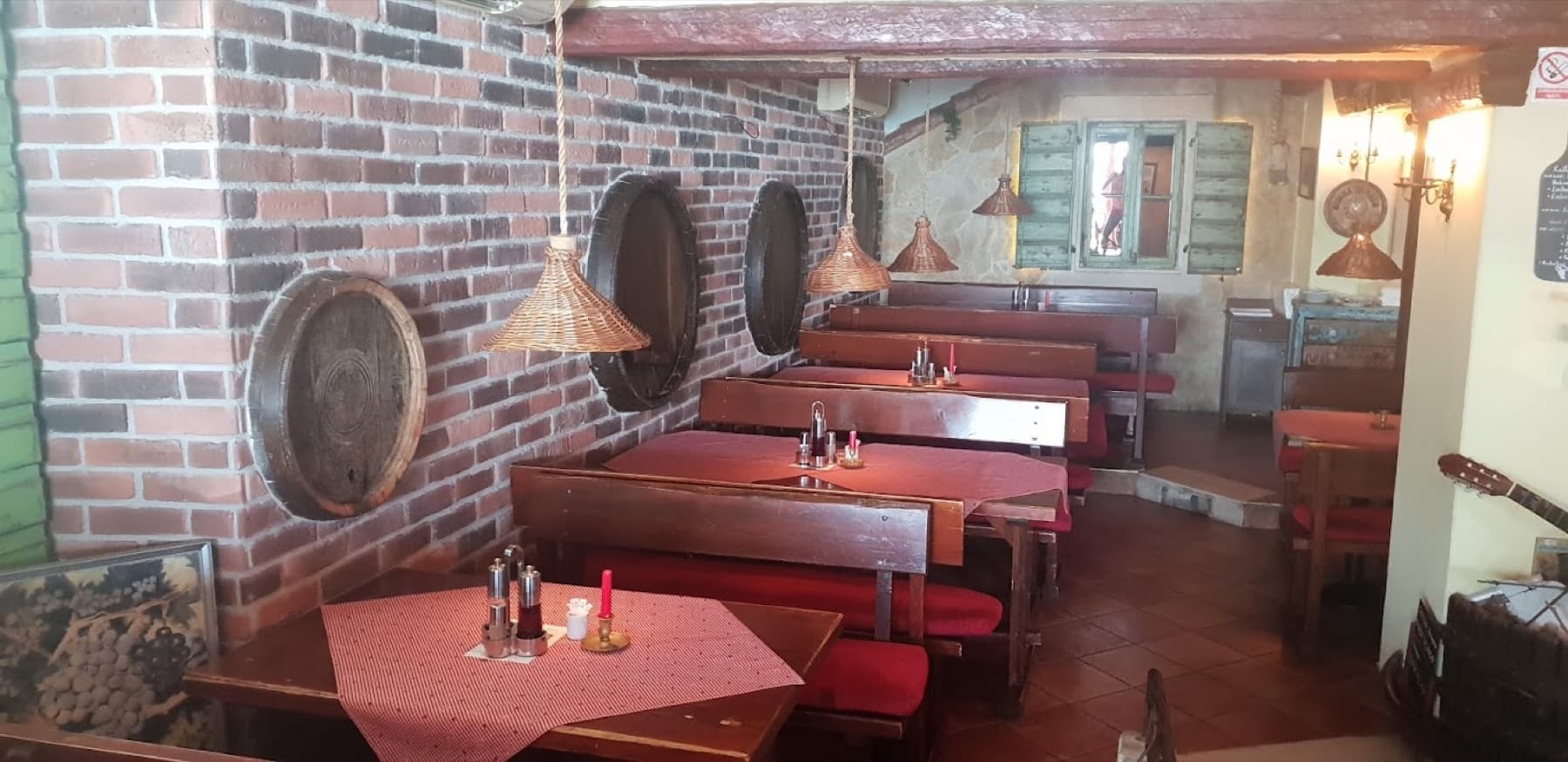
The word konoba originally referred to the cool cellar room of a Dalmatian stone house in which wine, olive oil and air-dried ham were stored. It became the name for a small, family-run place with a short menu. You rarely recognise a good konoba by its sign but by its menu: the shorter, the fresher.
A restoran is larger and broader in scope, a gostionica is more of an inn, and a bistro is what the name suggests. And a caffe bar in Croatia is explicitly not a restaurant – there you get coffee and drinks, but no food.
Reading the menu: fish by the kilo, meat by the portion
The most common reason for a surprise moment at the bill: fresh fish in Croatia is almost never sold per portion but by weight. The menu then shows a price per kilo, often divided into categories that each place sets itself – wild fish is more expensive than farmed, larger specimens more expensive than small ones. A whole fish of 800 grams costs accordingly what 0.8 times the price per kilo comes to.
How to do it right:
- Ask for the catch of the day. Often the fish is shown to you on a tray before you choose.
- Have the approximate weight stated before the fish goes to the kitchen. That is completely normal and nobody takes offence.
- Grilled fish classically comes with blitva (Swiss chard with potatoes; locally blašva) and olive oil. Side dishes are often charged separately.
- Meat dishes, pasta and risotto, by contrast, are priced per portion – no surprises in the sums there.
If you want to eat more cheaply and still taste the Adriatic, order blue fish: anchovies, sardines or grilled mackerel. That is the honest, old Dalmatian cuisine and costs a fraction of sea bass or sea bream.
Dishes you should have tried here
Dalmatian cuisine is restrained in its seasoning. Good olive oil, garlic, parsley, lemon – usually that's all it takes.
- Peka (also ispod peke): veal, lamb or octopus with potatoes cooked under a cast-iron bell in the embers for three to four hours. Must be ordered in advance, usually the day before, and is calculated by number of people.
- Brudet: fish stew with tomato and white wine, served with polenta.
- Salata od hobotnice: octopus salad with onion, parsley and olive oil – the best starter in the heat.
- Crni rižot: black cuttlefish risotto.
- Pašticada: braised beef in a sweet-and-sour sauce with gnocchi, the Dalmatian festive dish.
- Soparnik: wafer-thin Swiss chard dough flatbreads from the Poljica area, often found at markets and festivals.
Wine from the region goes with it. Kaštela has a role in wine history that hardly anyone expects: the old grape variety Crljenak Kaštelanski was identified by DNA analysis as the original form of Californian Zinfandel and Italian Primitivo. If you see the variety on a menu, try it – it's grown right here.
Kaštela: eating where hardly any tour groups go
The seven Kaštela towns are not an entertainment district but real places to live. That is exactly the advantage: you sit among locals, prices are more moderate than in Split's old town, and a table can still usually be had even in August.
On the Riva in Kaštel Stari is Konoba Kastilac (Obala kralja Tomislava) right on the water – fish, grill platters, unfussy. Also in Kaštel Stari you'll find Stari Dvor and Dupin BistroBar for an easygoing evening.
A little further east, in Kaštel Lukšić, Mala Mora and Štacija are good addresses, both with a sea theme and a Mediterranean menu. In Kaštel Kambelovac, Baletna škola is worth a visit, a hotel restaurant on the water that locals also book for celebrations. In Kaštel Gomilica is Restoran Spinnaker near the marina, and in Kaštel Novi are Konoba Dominik, Konoba Intrada and Restoran Agava.
Almost all of these places are a few minutes' drive from our villas in Kaštel Stari, many even on foot along the seafront promenade.
Trogir: an old town without the tourist trap
Trogir's old town is a UNESCO World Heritage Site and accordingly well visited. The rule of thumb: the further you move from the broad waterfront promenade into the narrow lanes, the better the value for money gets.
Konoba Trs in an old stone house with a courtyard is listed in the Michelin restaurant guide and is the most reliable address for more ambitious Dalmatian cuisine – check the current location before visiting. Restoran Pašike belongs to the heritage hotel of the same name and values old local recipes. For more down-to-earth and cheaper, there are Konoba Škrapa and Konoba Fortin; if you simply want a good pizza with children, Mirkec on the Riva is right.
Right by the bridge to the mainland are Trogir's green market and fish hall (ribarnica). Both are liveliest in the morning and worth a visit even without any intention to shop.
Split: from stand-up snacks to a terrace on the water
Split is the culinary playground of the region. A few classics that have proved their worth:
Villa Spiza in an old-town lane writes the menu on a chalkboard daily, takes no reservations and fills up quickly accordingly – come early. Konoba Fetivi near Matejuška harbour is recommended in the Michelin restaurant guide and does classic fish cooking without a show. For peka in the city, Konoba Kod Jože is the well-known address – the rule here: order ahead. Zrno Soli sits above the yacht marina and is the choice for a special evening with a view.
And if you want something quick in between: Kantun Paulina in the Varoš district has been grilling ćevapi over the counter for decades, and in the old town you can get burek for breakfast on every second corner.
Markets: Pazar and Peškarija
The green market Pazar lies right by the eastern wall of Diocletian's Palace, in front of the Silver Gate, and is the belly of the city: vegetables, fruit, cheese, figs, candied orange peel. The selection is greatest in the early morning, and it gets quiet from early afternoon. Take cash and let the vendors choose the goods – even squeezing the fruit yourself is considered impolite. On the other side of the old town, near Marmontova, stands the fish hall Peškarija, an Art Nouveau building in which the day's catch is sold.
Smaller, but practical for everyday life: the fruit and vegetable market in Kaštel Stari. If you cook for yourself, shop here in the morning and grill in the evening. Our villas have a fully equipped kitchen and an outdoor kitchen with a BBQ – sea bream from the market, olive oil, lemon, done.
Practical tips for high season
- Reserving: from June to September, a reservation in Trogir and Split is good manners, and in Kaštela it makes sense for larger groups. Always book peka at least a day ahead.
- Mealtimes: locals eat late. Between 6 and 7 pm you're almost alone, and from 8 pm it gets busy.
- Tipping: around 10 per cent is customary and gladly given in cash, even if you pay by card. In small konobas cash is generally welcome.
- Cover charge and bread: bread is often charged separately. That's normal and not a trick.
- Water: tap water in Croatia is perfectly drinkable and is usually brought free of charge on request.
For a table in high season, it is best to reserve yourself, one to two days in advance – English is spoken in most places, often German too. If you are unsure which place suits your occasion, feel free to ask us via our contact page: we'll tell you where it's currently worth going and where you're better off booking ahead in high season.
In short
Eat in Kaštela if you like it quiet and affordable, in Trogir for an evening in the old town and in Split if you want choice and ambition. Always ask about the weight when ordering fish, order peka in good time, and go to the market at least once in the morning – it is the most honest way into Dalmatian cuisine.
You'll find more practical information on getting here, transport, excursions and everyday life in the region in our Croatia guide . And if you don't have accommodation yet: our private villas with a pool in Kaštel Stari are exactly halfway between Trogir and Split – short distances in both directions.