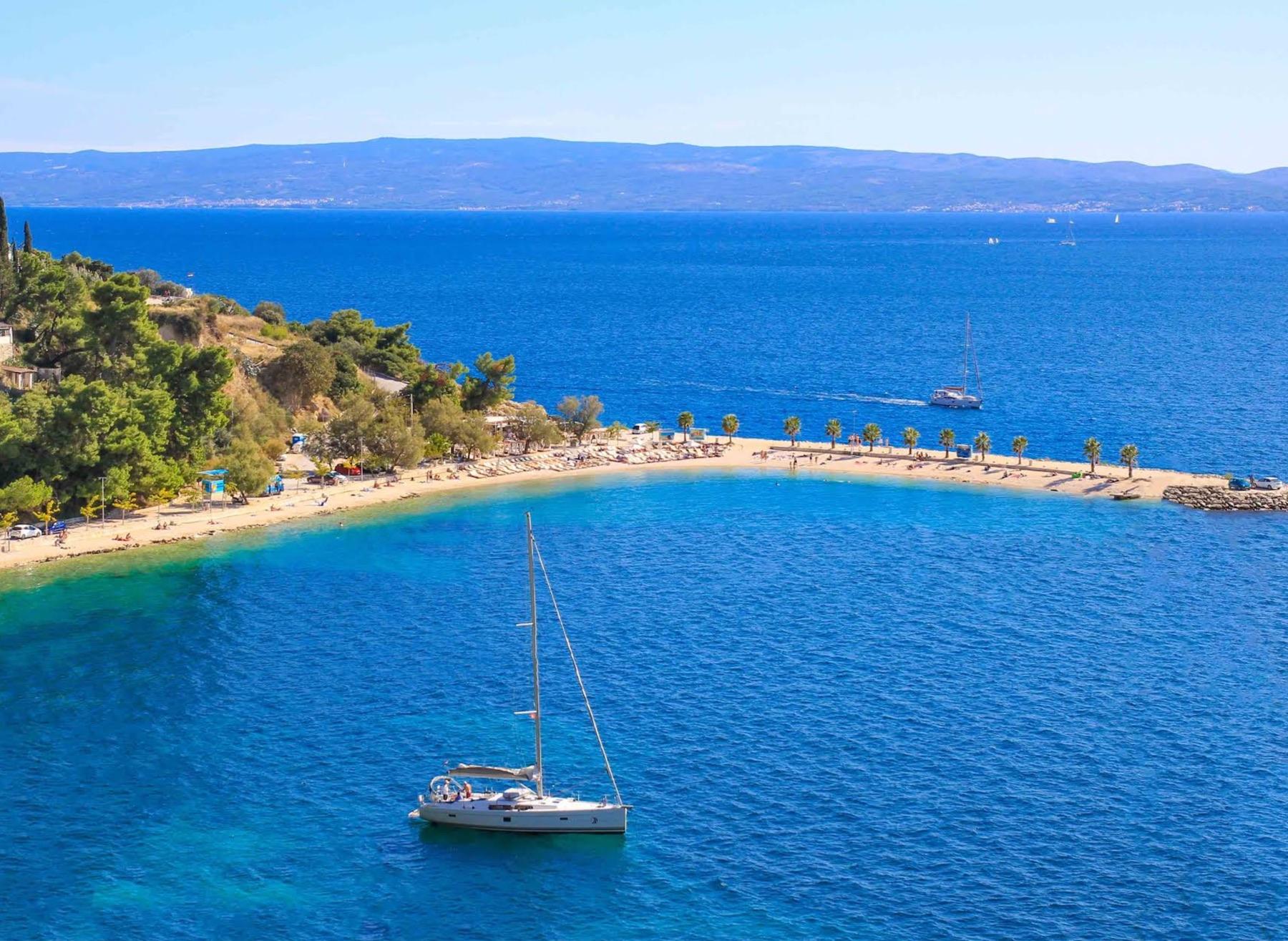
I'm spending the winter myself at Villa Just be Alive in Kaštel Stari, between Split and Trogir. The question friends back home ask me most isn't "What's the weather like?" but "So what does it actually cost down there?". The honest answer: less than many think when it comes to coffee and buses – and more than many hope when it comes to rent and the supermarket. Since Croatia adopted the euro, it is no longer a budget destination.
These are the numbers I work with myself. Unless stated otherwise, everyday prices come from Numbeo (as of 17 November 2026). Numbeo collects prices entered by its users – crowd-sourced data, not official statistics. Good for orientation, not to be taken to the cent.
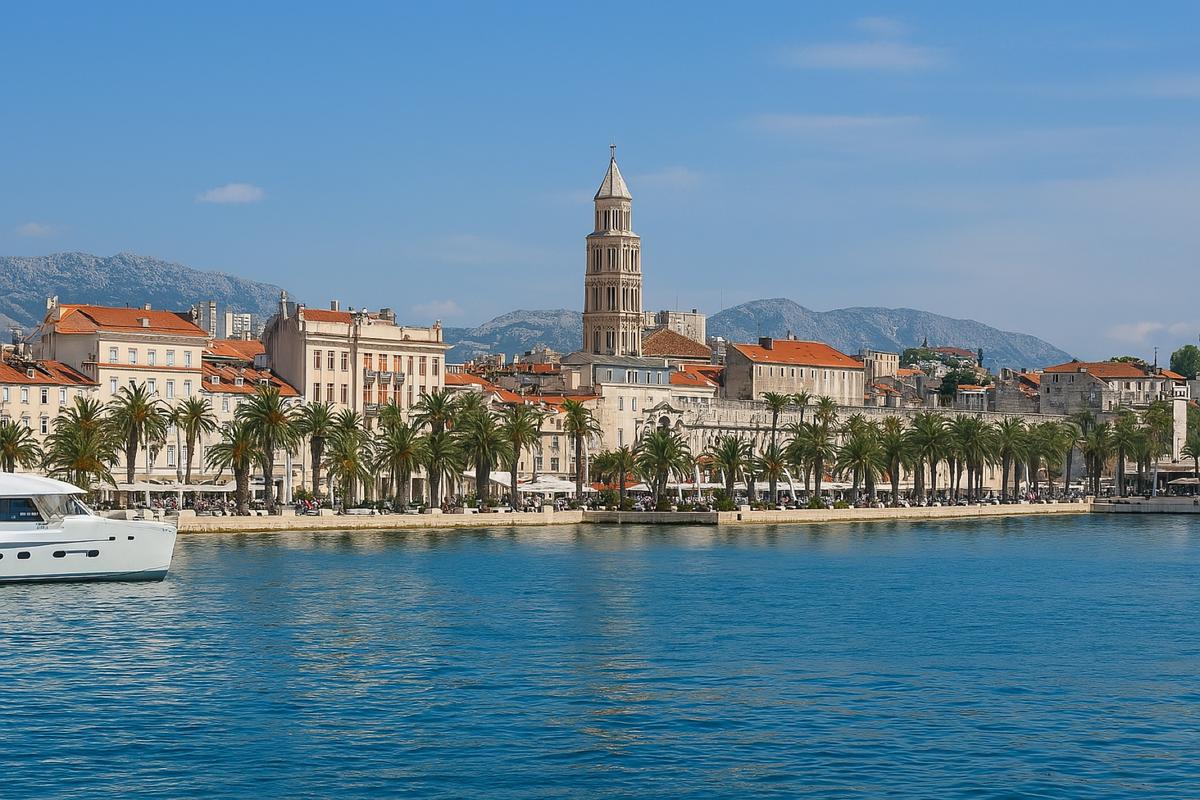
Everyday prices in Split
| Item | Price |
|---|---|
| Meal at an inexpensive restaurant | approx. €15 |
| Dinner for two, mid-range, three courses, no drinks | approx. €66 |
| Cappuccino | approx. €2.52 |
| Draught beer in a bar | approx. €4.25 |
| Milk, 1 litre | approx. €1.08 |
| White bread, one loaf | approx. €1.71 |
| Eggs, 12 | approx. €3.75 |
| Chicken breast | approx. €8.40/kg (converted) |
| Petrol | approx. €1.70/litre |
| Monthly public transport pass | approx. €35 |
| Single bus ticket | approx. €1.50 |
| Mobile plan with 10 GB+ | approx. €18 |
| Internet (60 Mbps+) | approx. €37 |
| Gym, monthly | approx. €53 |
Excluding rent, Numbeo estimates around €811 a month for a single person and around €2,881 for a family of four. The cappuccino, by the way, is the best deal in town: for €2.52 you can sit over it for an hour in Dalmatia without anyone asking whether you'd like anything else. It's basically office rent with milk foam.
Rent: apartment vs. villa, honestly calculated
According to Numbeo, a one-bedroom apartment in Split costs around €902 a month in the centre and around €643 outside it. A three-bedroom apartment is around €1,716 in the centre and €1,165 outside. Add utilities of around €186 for 85 m² and internet at around €37.
On paper, the apartment is clearly cheaper. In practice, a few things come on top that no table shows:
- Deposit: one month's rent or more as security is common – money that's tied up for the whole stay.
- Contract length: many landlords want long leases. Finding something good for one or two months is hard, and in summer many apartments go to holiday guests instead.
- Furnishing: "furnished" doesn't automatically mean duvets, a decent workspace or more than two pots.
- Registrations: electricity, internet and, where needed, registering your stay mainly cost time. What applies to EU and non-EU citizens is covered in our guide Long stay in Dalmatia.
- Heating: many seaside apartments are built for summer. In January you heat with the air conditioning – and pay the electricity yourself.
For comparison, our winter offer: a whole villa for up to four people from 28 nights costs approx. €2,400 a month at Villa Just be Alive and approx. €2,290 at Villa Just be Light. Electricity (heating included), water, Starlink Wi-Fi, bed linen, towels and final cleaning are included, and dogs are welcome.
For a couple, an apartment is still cheaper – that's part of the truth. The maths gets interesting with three or four people: €2,290 divided by four is around €573 per head – less than a one-bedroom in the centre, with a room and bathroom for everyone, a garden and a hot tub. And if you're only staying a month or two, you skip the deposit, the flat hunt and the trip to the furniture store.
Groceries
The big chains are Konzum, Lidl, Kaufland, Spar, Tommy and Studenac; Tommy and Studenac have several branches in Kaštela too. Supermarket prices for many products are on a par with Germany, some things cost more – especially branded goods, toiletries and cheese. Local cheese is around €11.50 per kilo according to Numbeo (converted).
One thing you should know before you're standing there on a Sunday without breakfast: in Croatia, each shop may only open on 16 Sundays a year, and most use those Sundays in summer. So in winter only some shops are open on Sundays. Shopping on Saturday isn't a tip here, it's a survival strategy.
For fruit, vegetables and fish, it's worth heading into town: the green market Pazar is right on the east side of Diocletian's Palace, the fish hall Peškarija on the western edge of the old town. Go in the morning – later, the best is gone.
Eating out
A simple meal for around €15 in Dalmatia usually means a dish of the day, pasta or ćevapi in a konoba or bistro. For a three-course dinner for two, Numbeo puts it at around €66 without drinks; add wine and fish and you'll quickly be above that. Fresh fish is often charged by weight – ask what the piece costs before it lands on the grill.
The cheapest way to get full is the bakery. The most expensive item in winter? The second burek, because the first one was so good. Which places between Split, Kaštela and Trogir stay open in winter is in our article Restaurants in Split, Trogir and Kaštela. How tipping and card payments work is explained in Money, payments and tipping in Croatia.

Getting around: car or bus?
If you live in Split itself, you'll manage fine by bus and on foot; the monthly city pass costs around €35 according to Numbeo. From Kaštela, Promet Split's bus line 37 runs to Split and Trogir, and there's also the suburban train to Split. Separate fares apply for routes beyond the city limits – current prices are on the Promet Split website.
A car is more convenient, especially for the weekly shop and trips to Krka National Park or into the mountains. Petrol costs around €1.70 a litre. In my experience, rental cars are much cheaper in winter than in August; what to watch out for when renting and parking is in our article Car hire at Split Airport. For individual trips, taxis and Uber work well; Numbeo puts the taxi starting fare at around €3.32.
Health, briefly
With the European Health Insurance Card (EHIC) you're covered in Croatia at doctors, pharmacies and hospitals that have a contract with the Croatian Health Insurance Fund (HZZO). According to the European Commission you pay a co-payment there, for example €1.32 per GP visit and per prescription and €17.70 per day in hospital. The card isn't valid at private doctors and clinics. What to check with your insurer before a longer stay is in the long-stay guide.
What's cheaper in winter – and what's more expensive
Cheaper: accommodation. Many holiday apartments and houses stand empty from November to March, so landlords are open to negotiation. Rental cars and trips like Krka are cheaper outside the season, and nobody charges a summer premium on the promenade.
More expensive: electricity for heating, if you pay it yourself. Croatian power prices are far lower than in Germany (the figures are in the long-stay guide), but a poorly insulated flat with three AC units runs for a lot of hours in January. There are fewer flights in winter, and less choice often means higher prices for a quick trip home. And because many beach bars are closed, you cook more yourself – which helps your wallet and hurts the bakery.
The cheapest thing in winter, by the way, is Mount Kozjak behind Kaštela: it costs nothing but sore legs.
Conclusion: one month for two, calculated
A sample budget for two people staying one winter month, cooking themselves and eating out once or twice a week. For living costs I take Numbeo's figure for one person twice (2 × €811); if you share a lot, you'll probably come in lower. The estimate is rough – depending on your lifestyle you'll land above or below it:
| Apartment outside centre | Apartment in centre | Villa Just be Light | |
|---|---|---|---|
| Rent | €643 | €902 | €2,290 |
| Utilities | approx. €186 | approx. €186 | included |
| Internet | approx. €37 | approx. €37 | included (Starlink) |
| Living costs for two | approx. €1,622 | approx. €1,622 | approx. €1,622 |
| Total per month | approx. €2,488 | approx. €2,747 | approx. €3,912 |
| One-off | deposit, search, possibly equipment | deposit, search, possibly equipment | – |
So for a couple, an apartment is around €1,150 to €1,400 a month cheaper – if you find a good one that's available for just a month. If you're staying half a year or longer and mainly want to save, look for an apartment – I say that as a landlord, too. With three or four people, with a dog, with two laptops that shouldn't be on calls against each other, or for one month without paperwork, the maths looks different.
If you want to run the numbers for your dates: monthly prices are on Long stay & discounts, and what a working winter in the villas feels like is in my article Spend winter in Croatia. Or write to us via the contact form – I'll tell you honestly whether the villa makes sense for you or whether you're better off with an apartment.