What we always tell guests first
When you arrive with us, we almost always say the same five things. They're exactly the ones that aren't in any guidebook.
- Drink the tap water. Kaštela, Split, Solin and Trogir are supplied from the Jadro spring. The quality is good. You don't need to lug crates of mineral water around.
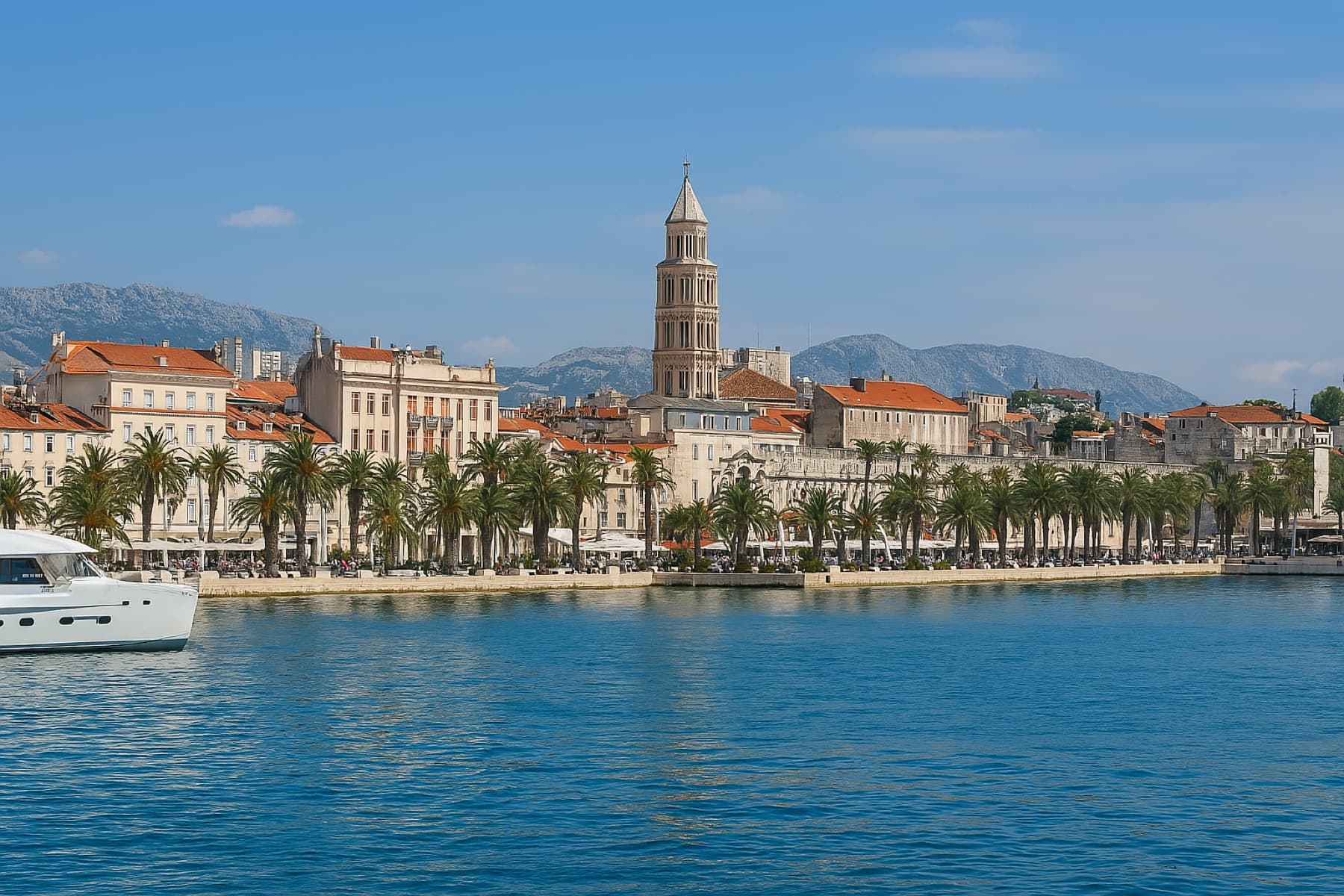
- Not much happens between 1 and 5 pm. Small shops close, the Riva lies empty in the sun. Schedule sightseeing for the morning or the evening from 6 pm.
- You pay in euros , since 1 January 2023. Cards work almost everywhere; you need cash at the market, at fruit stalls and in some small konobas.
- The emergency number is 112 – for everything: ambulance, fire brigade, police, sea rescue. You'll get help in English there, often in German too.
- Don't drive to Split on your first evening. Instead, walk along the seafront promenade in Kaštel Stari to the castle. Afterwards you'll understand why you're staying here and not in the city.
Seven villages, seven castles
Kaštela is not a town in the usual sense but a chain of seven settlements along the bay: Kaštel Sućurac, Gomilica, Kambelovac, Lukšić, Stari, Novi and Štafilić. From the end of the 14th century, noble families from Trogir and Split had sixteen fortified manor houses built here; villages grew up around seven of them. Hence the saying: seven villages like seven swans.
Kaštel Stari
The Trogir humanist and writer Koriolan Cipiko had his castle built in 1476 – half fortress, half palace, originally reachable only by a drawbridge. After a fire in 1493, the Renaissance arcaded courtyard was added. The lanes around it still follow the right-angled grid of the first settlers today.
Kaštel Lukšić
Vitturi Castle, completed in 1564 by the brothers Nikola and Jerolim Vitturi, is now a cultural centre and houses the town museum. The drawbridge was replaced by a stone bridge in the 18th century. This is the setting of the story of Miljenko Rušinić and Dobrila Vitturi from feuding families – the Dalmatian Romeo and Juliet motif. Their grave in the Church of St John bears the inscription "Rest in peace, you lovers". In early August the legend is performed in the town as an open-air play.
Kaštel Gomilica
The Kaštilac stands on a small island about forty metres off the coast, connected by a stone bridge. Benedictine nuns completed it in 1545 as protection against the Ottomans; the monastery's roots go back to 1078. If you know "Game of Thrones", you'll recognise Braavos. Go early in the morning and you'll have it to yourself.
Kaštel Štafilić
In Kaštel Štafilić stands an olive tree estimated to be around 1,500 years old – possibly a remnant of Roman estates. It still bears fruit. Olive culture here is no decorative theme: if you're here in November, you'll see nets lying under the trees everywhere.
Kozjak – the mountain at your back
Kozjak stretches for about 16 kilometres from Klis in the east to the Malačka saddle in the west and is criss-crossed by around 80 kilometres of marked trails. Not high mountains – but it has the longest rock face in Croatia, 50 to 250 metres high.
- Sveti Ivan Biranj (631 m): the highest peak of western Kozjak, with a chapel. About 1 hour 15 minutes from the Malačka saddle, considerably longer on foot from Kaštel Stari.
- Malačka (480 m): a marked trail leads straight up from Kaštel Stari. From the top you can see the whole bay, Split with Marjan, Trogir and the offshore islands.
In summer, set off before seven o'clock and take more water than you think you need – there is hardly any shade halfway up. In spring and autumn, Kozjak is the best thing about the region.
Wine: Zinfandel comes from here
One of the loveliest stories in the area is a scientific one. For decades, people puzzled over the origin of Californian Zinfandel. In 2001, a DNA analysis led by Carole Meredith at the University of California, Davis, provided the answer: Zinfandel is identical to Crljenak kaštelanski – and also to Apulian Primitivo. The decisive vine stood in Ivica Radunić's vineyard in Kaštel Novi, a few kilometres from here.
The variety had almost disappeared; today it is being grown again. Ask for Crljenak at the small wineries in the area – and don't overfill your afternoon. They rarely let you go before you've tried the olive oil too.
Markets: Pazar, Ribarnica and the stall around the corner
The Pazar, Split's green market, lies right by the eastern wall of Diocletian's Palace. Come between seven and ten o'clock – after that the best is gone and the heat stands between the stalls.
A few steps further on, on the west side, is the Ribarnica, the fish market: an Art Nouveau building more than 120 years old. You will notice that there are no flies there – that is thanks to the sulphur from the neighbouring spring. Buy whatever is plentiful at the moment – anchovies, sardines, mackerel. Cheaper and better than any expensive fillet.
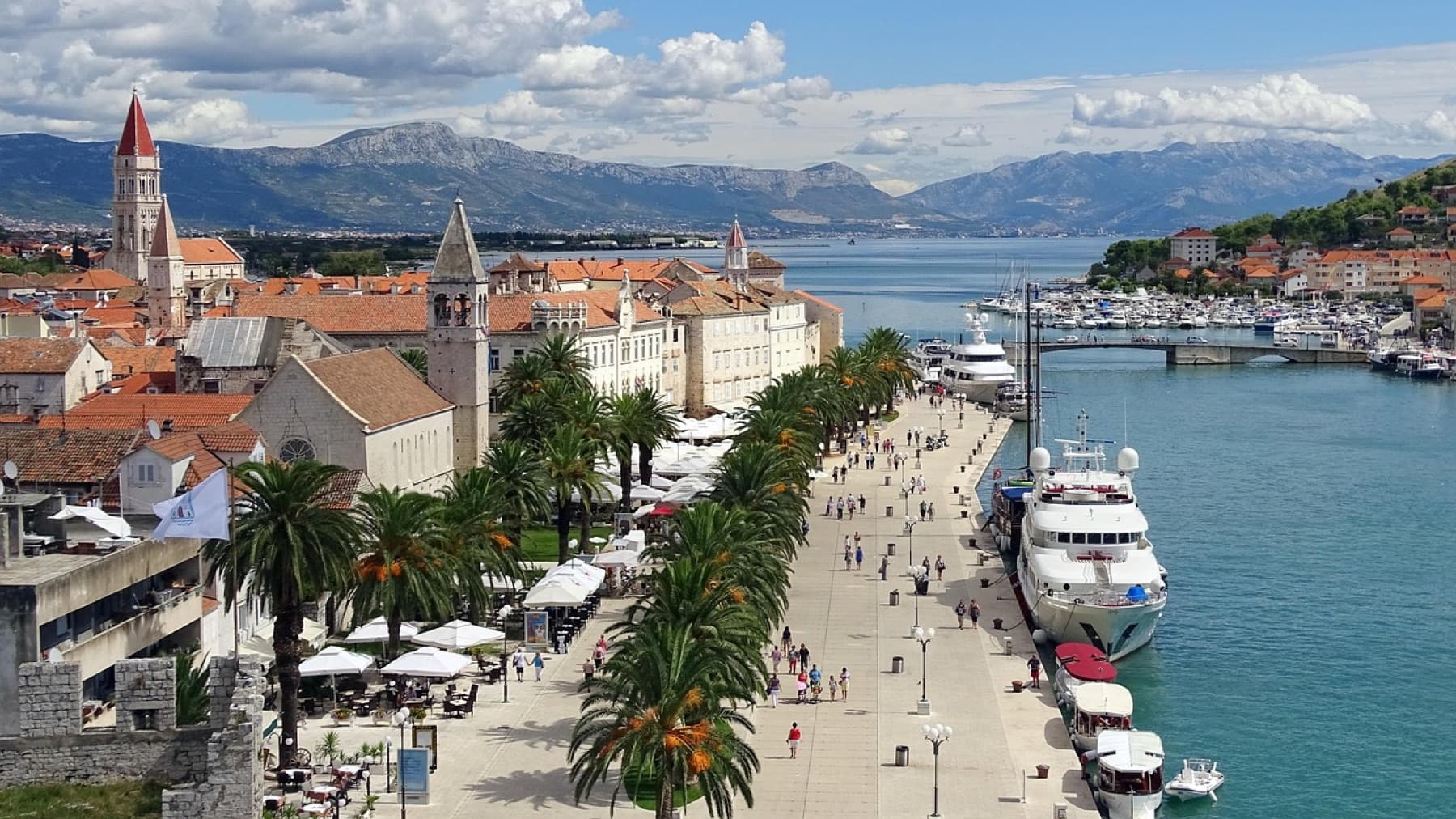
Kaštel Stari has a small fruit and vegetable market, and Trogir has one on the edge of the old town along with a fish hall. Then there are the roadside stalls: figs, melons, tomatoes, wine in plastic bottles. Cash, small notes.
Shopping, deposits, rubbish
Supermarkets and Sundays
Konzum and Tommy are the most widespread chains, and you'll find Lidl nearby too. Since July 2023, shops in Croatia may open on only 16 Sundays a year – each retailer decides for itself which ones, and on the coast most put them in the summer months. Don't rely on it all the same: do your shopping on Saturday. Exempt from the rule are petrol stations, kiosks and shops in ports, marinas, campsites and airports, among others.
The same goes for public holidays. In summer, the ones that affect you most are 5 August (Victory Day) and 15 August (Assumption, Velika Gospa). The latter is a big day in Dalmatia: many families travel to places of pilgrimage, and restaurants are full.
Deposits and rubbish
A deposit is charged on most drinks containers of 0.2 litres and up – PET, glass, cans – ten cents each since the start of 2025. You can return them at the machines in larger supermarkets; you receive a voucher for the till. Collect everything in a bag and hand it in on your last shop.
Waste is sorted into paper, plastic, glass and general waste; the containers are usually grouped together by the road. Collection days differ from town to town – we'll tell you on site which bin goes out when.
Car, parking, boat
In Split, parking is divided into zones and can be paid for by SMS: you send your number plate without spaces to the number for the respective zone – 708211 (red), 708212 (blue), 708213 (green), 708214 (yellow). With a German or Austrian SIM card, dial the number with the country code (+385). You get a reminder shortly before it runs out. Usually more practical: leave the car behind. Trains run from Kaštel Stari station to Split, and in summer passenger boats operate in the bay – seasonally between Kaštela and Split and on the Trogir–Slatine–Split line. After an evening in the old town, the journey back across the water is the more pleasant option; timetables change every year, so ask us shortly beforehand. In Trogir and Split you can book water taxis spontaneously at the jetty – agree the price before getting in, not afterwards.
Health, tourist tax, air conditioning
Pharmacies are called ljekarna . There are some in the larger Kaštela towns and in Trogir, and in Split some with a night service. Many familiar remedies are sold under other names; the staff usually speak English.
The tourist tax is charged per person per night. In Split-Dalmatia County it is about 1.60 to 2.00 euros in high season and, outside the season, around 1.00 to 1.50 euros depending on the town. Children under 12 are exempt, and 12- to 18-year-olds pay half the rate. It is usually settled on site.
On air conditioning: keep shutters and windows closed during the day and air the house only after sunset. A unit set to 24 to 26 degrees cools more reliably than one set to 18 degrees with the terrace door open. Whether electricity is billed as a flat rate or by consumption is stated in your booking confirmation.
Mosquitoes exist, especially the day-active tiger mosquito. You don't need a net, but you do need a plug-in repellent for the bedroom and the reflex of not leaving saucers and buckets standing with water in them.
Pomalo – the most important word
Pomalo literally means "little by little"; in Dalmatia it means: no rush. It is a greeting, an answer and an attitude to life all in one. When someone tells you he's coming "pomalo", he will come – just not in the next quarter of an hour. If you read that as unreliability, you'll be in a bad mood for two weeks. If you go along with it, you extend your holiday by half, as it feels.
Part of this: you greet when entering a shop ( dobar dan ). The morning coffee takes an hour, not five minutes. And nobody eats dinner at 6 pm.
Where the day ends most beautifully
The Kaštela bay opens to the south-west, and the sun sets behind Čiovo. Three places: the seafront promenade in Kaštel Stari, where half the neighbourhood goes for a walk in the evening; the Malačka saddle, if you time the climb for late afternoon; and the bridge to the Kaštilac in Gomilica, where the light turns the walls orange.
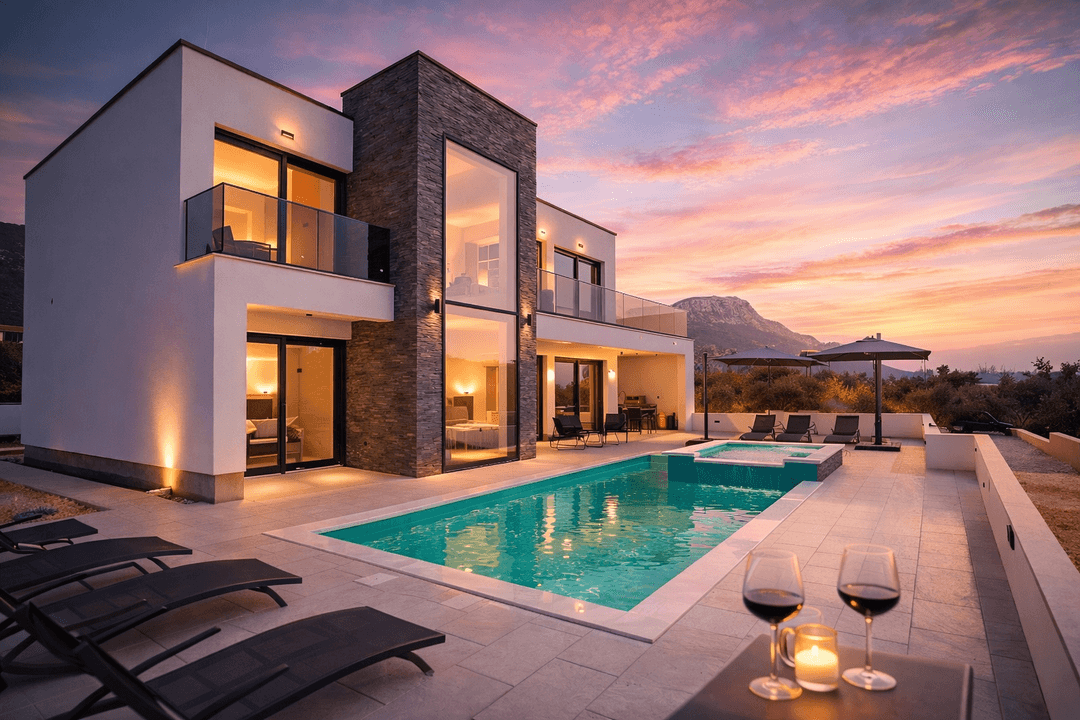
You'll find more practical information on getting here, transfers and everyday life on site in our Croatia guide for guests . If you're still looking for the right house, take a look at our villas in Kaštel Stari. And if you want to know who is actually writing this: about us .